
AviNutri - for GLP-1 Therapy
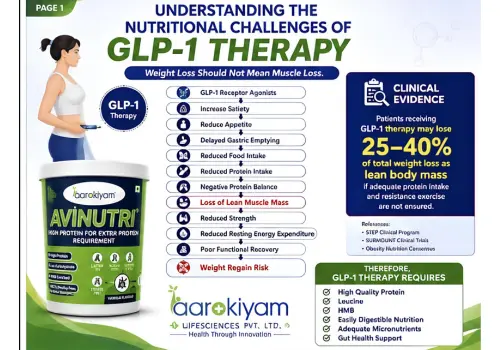
Are you eating less than before, but worried that you are not getting enough protein?
That is a common concern when GLP-1 medicines reduce appetite. You may feel full after a few bites. A meal that once seemed normal can suddenly feel too large. While eating less may support your weight-loss goal, it can also make it harder to get enough protein and other nutrients. This is where AviNutri for GLP-1 Therapy may be worth considering.
It is not a weight-loss medicine. It is a nutritional supplement designed to provide protein and additional nutrients when your regular diet does not quite meet your needs.
Why does protein matter during weight loss?
When you lose weight, your body does not lose only fat. Some lean tissue can also be lost.
The amount varies between individuals and depends on factors such as calorie restriction, rate of weight loss, protein intake, age and physical activity. Current guidance therefore focuses on improving the quality of weight loss, rather than looking only at the number on your weighing scale.
That makes protein during weight loss an important part of the conversation. Protein provides amino acids needed for muscle maintenance and repair. However, protein alone is not a magic shield against muscle loss. Resistance exercise matters too.
How to get enough protein on GLP-1 when your appetite is low
You do not necessarily need to eat bigger meals. Instead, make your smaller meals count. Try starting with the protein portion of your meal. Depending on what you eat, that could mean eggs, curd, paneer, fish, chicken, dal, beans, soy or another protein-rich food you tolerate.
For example, if you can only manage half your usual lunch, eating the dal and curd first may give you more nutritional value than filling up on rice or roti.
Current nutrition guidance also recommends smaller, nutrient-dense protein choices when appetite is reduced. Protein shakes can be useful when ordinary food does not provide enough.
Where does AviNutri fit?
AviNutri can be viewed as a protein and nutrition gap-filler. The product information you provided shows that a 30 g serving contains approximately:
Nutrient | Per 30 g |
Protein | 16.5 g |
Energy | 110 kcal |
Leucine | 1.158 g |
HMB | 150 mg |
Fibre | 2.5 g |
Carbohydrate | 7.5 g |
Added sugar | 0 g |
It also contains whey protein concentrate, MCT powder, inulin, L-carnitine, taurine, vitamins, minerals and Bacillus coagulans. The product label recommends 30 g twice daily or as advised by a healthcare professional.
Two servings would provide approximately 33 g protein and 220 kcal. That does not mean you automatically need two servings. Your total protein requirement depends on your body, diet, activity level and health.
Can protein help with muscle loss?
Yes, adequate protein can support muscle maintenance during weight reduction. But protein for muscle loss should not be treated as a standalone solution.
Recent reviews recommend combining sufficient protein with structured resistance exercise and appropriate overall nutrition. Think about it this way: Protein supplies the building material. Strength training gives your muscles a reason to keep adapting. You need both for a stronger strategy.
How to prevent muscle loss on GLP-1
There is no guaranteed formula. Still, a few practical habits can help:
- Prioritise protein at meals.
- Avoid letting your daily food intake become unnecessarily low.
- Spread protein across the day.
- Include resistance exercise when medically appropriate.
- Stay hydrated.
- Pay attention to weakness or declining physical function.
- Speak with your healthcare professional if nausea or vomiting prevents adequate eating.
This is one area where competitors often focus heavily on the supplement itself.
We would rather focus on your entire routine. A protein powder cannot compensate for consistently inadequate food intake, severe nausea or a lack of appropriate physical activity.
What should you eat when GLP-1 medicine reduces appetite?
Keep meals smaller and protein-focused. For example:
Breakfast: eggs with curd.
Lunch: dal with vegetables and a modest serving of rice.
Snack: Greek yoghurt, milk or another protein-rich option.
Dinner: paneer, tofu, fish, chicken or another suitable protein source with vegetables.
If you cannot comfortably meet your protein needs through food, a supplement may help.
That is the practical difference between using a supplement intelligently and simply adding another product to your routine.
Can you take protein powder with GLP-1?
For many people, a protein supplement can be considered when food intake is insufficient. However, your personal situation matters. If you have kidney disease, significant liver disease, a milk-protein allergy, pregnancy or breastfeeding, major digestive problems or another medically restricted diet, speak with your healthcare professional first.
Also remember that AviNutri contains whey protein concentrate. A lactose-free claim should not be interpreted as meaning that the product is free of milk proteins.
What do leucine and HMB actually do?
AviNutri contains both. Leucine is an essential amino acid involved in processes related to muscle protein synthesis. HMB is a metabolite of leucine that has been studied for muscle-related outcomes. But we should keep expectations realistic.
Research on HMB during GLP-1-associated weight loss is still developing. A recent review notes that clinically meaningful HMB supplementation is generally discussed around 3 g per day, while the AviNutri label provides 150 mg per 30 g serving.
So it would be misleading to suggest that the HMB in one serving guarantees protection from muscle loss.
The better approach is to consider it as one part of the overall nutritional formula.
AviNutri or ordinary protein powder?
That depends on your needs.
If your main need is… | Consider |
More protein | A protein-focused product |
Protein plus additional nutrients | A broader nutritional formula |
Very low appetite | Smaller protein-rich meals plus supplementation if needed |
Muscle support | Protein plus appropriate resistance exercise |
AviNutri provides protein alongside HMB, leucine, fibre, MCT powder, vitamins, minerals and a probiotic. That broader combination may appeal to someone whose overall food intake has fallen.
Still, more ingredients do not automatically mean better results. Your actual nutritional gap should guide the decision.
A simple protein check you can do at home
Before adding another serving, look at yesterday’s meals.
Ask yourself:
- Did I eat a protein-rich breakfast?
- Am I regularly skipping meals because I feel full?
- Did lunch contain a meaningful protein source?
- Did I eat protein again at dinner?
- Have my portions become much smaller?
- Am I becoming weaker or less active?
If several answers concern you, it may be time to discuss your protein intake with a dietitian or doctor.
This simple check can be more useful than copying someone else’s supplement routine.
Is AviNutri a weight-loss product?
No. AviNutri is a nutritional supplement. Its purpose is to contribute protein and other nutrients. It does not replace prescribed GLP-1 treatment and should not be presented as a medicine that causes weight loss. If your goal is healthy weight reduction, think beyond the scale. Your strength, food intake and ability to stay active matter too.
AviNutri — quick summary:
30 g serving: 110 kcal, 16.5 g protein
2 servings/day: 220 kcal, 33 g protein
Sugar: 0.3 g; added sugar: 0
Fiber: 2.5 g/serving
Protein source: whey protein concentrate
Also contains leucine, HMB, MCT, vitamins/minerals & probiotics
Low fat & sodium
Lactose- and gluten-free according to the label
Good option if GLP-1 reduces appetite and makes protein intake difficult
Main drawback: not as protein-dense as a simple whey protein; HMB amount is relatively low.
Overall: Good nutritional protein supplement, especially for maintaining protein intake during weight loss.
The bottom line
When your appetite falls, eating less is only part of the picture.
You also need to think about what you are still managing to eat.
Start with protein-rich foods. Keep portions manageable. Spread your intake through the day. Add a supplement when it genuinely fills a nutritional gap.
And if you are trying to protect your muscles, do not forget strength training.
AviNutri can support your nutrition. Your overall routine does the bigger job.
FAQs
There is no single target for everyone. Higher protein intakes are often considered during active weight loss, but your appropriate amount should be based on your individual circumstances.
Choose protein-rich foods first, use smaller meals when necessary, spread protein through the day and consider a supplement if food intake remains insufficient.
Focus on adequate protein, resistance exercise, sufficient nutrition and appropriate medical monitoring. Protein alone is unlikely to be enough.
It may be appropriate when your normal food intake does not provide enough protein. Check with your healthcare professional if you have medical conditions or dietary restrictions.
Choose smaller portions of nutrient-dense foods. Eggs, curd, paneer, fish, pulses, soy and other protein-rich foods can be useful options, depending on your diet and tolerance.
For the full product details, ingredients, specifications, preparation information and purchasing options, visit Aarokiyam’s existing AviNutri Powder page. View the complete AviNutri Powder product page.
Contact Us
Want to discuss bulk orders?
Please complete the online form if you have any questions or would like to talk about large orders. When you require any information, our employees will get back to you right away. To satisfy your healthcare demands, we at Aarokiyam Lifescience are dedicated to offering top-notch products and outstanding service.
Discover the Aarokiyam difference, where compassionate care and cutting-edge inhalation therapies combine to bring better health to life.
